
Tia (named changed for privacy) didn’t go looking for porn. Instead, she found her brother’s “stash” as a young teen.
“It was accidental at first,” explains Tia, “And once I saw it, I knew I wasn’t ‘supposed’ to tell anyone.”
There was no adult explaining what Tia was seeing. No conversations about sexuality, arousal, or boundaries.
Instead Tia began a new struggle with porn’s secrecy, shame, and the lure of lots of extra dopamine, not knowing her ADHD was fueling her struggle as well.
“For my neurodivergent brain, that combination mattered more than I realized. I can imagine if at 16 I had a smartphone? My brain would’ve been fried by now.”
If you’ve been diagnosed with ADHD and you struggle with porn use, Tia’s story holds hope and helpful steps, no matter your gender.
Table of Contents
- How ADHD, Secrecy, and Growing Self-Awarness Shaped One Woman’s Struggle With Porn
- Early Exposure, Easy Access, and the Power of Secrecy
- An ADHD Lifestyle of Impulsivity and Sexual Acting Out During Stress
- “Dig for Whys”: Key Questions to Uncover Porn and ADHD Triggers and Experience Relief
- Resource Spotlight: ADHD & Porn Addiction (Clinical)
- You Are Not Permanently Broken (you’re probably dysregulated)
- Advice for Accountability Partners: Provide Support That Doesn’t Shame
- Conclusion
How ADHD, Secrecy, and Growing Self-Awarness Shaped One Woman’s Struggle With Porn
Years later, after her ADHD diagnosis, Tia dug deep and researched to understand her challenges. She finally began to understand why pornography quietly became her drug of choice during seasons of stress, burnout, and change.
She asked to share her personal findings as a compassionate case study to help others, especially neurodivergent women who often feel devastatingly alone.
Tia discovered that ADHD, dopamine dysregulation, and stress combine to make the porn struggle more challenging for anyone neurodivergent or on the spectrum.
As she works on her recovery journey, she found that current research is starting to back up her personal discoveries.
ADHD in Women: The Diagnosis That Often Comes After Damage Is Done
First of all, Tia notes that ADHD in women is frequently missed.
Many women don’t present as hyperactive or disruptive.
Instead, they’re good at “masking” their symptoms. They commonly experience:
- internal restlessness
- emotional intensity
- chronic overwhelm
- difficulty regulating focus and motivation
- deep shame about feeling “different”
“I learned how to mask really well,” she said. “I didn’t want anyone to see me as weird.”
Tia built multiple successful careers as a business strategist, innovator, and marketer. She’s analytical, strategic, and creative.
While she’s high-achieving on the outside, many times she’s been exhausted on the inside.
Research consistently shows women are frequently diagnosed later, because they compensate until they can’t anymore. Masking works… until burnout forces clarity.
Early Exposure, Easy Access, and the Power of Secrecy
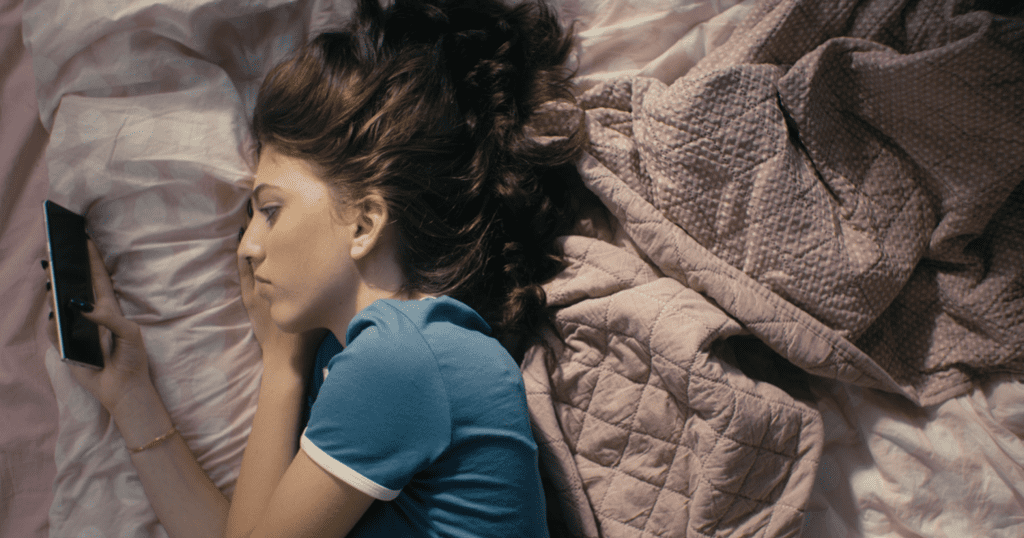
Her early exposure to porn wasn’t driven by curiosity. It was driven by availability.
“It was there. It was intense. And I could access it without anyone knowing.”
For a neurodivergent brain, secrecy isn’t neutral. It’s stimulating.
Porn quietly became an off-and-on habit acting as a:
- a dopamine shortcut
- an emotional regulator
- a private escape
This aligns with research showing that people with ADHD are more likely to use stimulating behaviors as self-medication, especially during emotional stress.
A 2023 study in Frontiers in Psychiatry found that ADHD traits are associated with problematic pornography use as a way to manage mood and internal distress.
An ADHD Lifestyle of Impulsivity and Sexual Acting Out During Stress
Tia admits this part of her story sounds like it’s straight out of a movie. With medication and helpful therapy, she is a very high-functioning neurodivergent.
A few years ago, she began traveling internationally for work-study programs and business. Her environment became an intensely exciting but very dangerous sexual playground.
During this time, she was unaware that her ADHD medication was contributing to a very high libido.
Despite her personal faith and prior commitments to celibacy, she fell hard.
“There were seasons where I made many impulsive and dangerous sexual choices I wouldn’t have made in a regulated state,” she said.
For her, sexual acting out wasn’t just about novelty.
It was about relief.
It was about seeking acceptance and connection.

ADHD impulsivity, especially under stress, lowers internal guardrails.
Add in novelty, isolation, and emotional exhaustion, and the risk increases.
Clinical research supports this pattern. A study in the Journal of Psychiatric Research found higher rates of hypersexual behaviors among individuals with ADHD, underscoring the importance of context-aware treatment instead of moral framing.
The Hard Year That Changed Everything
Tia’s turning point came during a year of intense transition.
Career change. Identity shift. Loss of routine.
And yet, she struggled with her underlying desire to be faithful to God and committed to celibacy.
“I was between jobs and redefining who I was,” Tia tells us. “I kept medicating myself until I could find relief.”
Porn use shifted from occasional to compulsive. Then a “friend” (making big bucks in the sex toy industry) introduced her to sex toys. It seemed like a safe alternative to her former lifestyle of promiscuous sex.
“Porn became the easiest drug available. It was “safe sex” to me, because I wasn’t acting out with a real person.”
Especially during ovulation.
“Hell Week”: When Ovulation Triggers Compulsive Sexual Behaviors
“There’s a week every month where everything gets harder,” Tia says. “I call it hell week.”
Ovulation intensified her:
- sexual desire
- impulsivity
- emotional reactivity
- urge for escape
“For seven days straight, I’d spend one to three hours watching porn. I dreaded ovulation because I knew what was coming.”
But biology, ADHD, stress, and unlimited access converging at once created a perfect storm for her compulsive porn use.
Research about ADHD-related impulsivity published in the International Journal of Environmental Research and Public Health supports this.
When clear lifestyle supports like routine, regular exercise, and attention to emotional regulation are interrupted, the risk of problematic porn use (PPU) goes way up.
Porn as Self-Medication, Not Simply A Moral Failure
One realization changed everything for her.
Tia began to see her porn use as dangerous self-medication.
“Stopping porn use wasn’t enough. I had to understand why porn was my ‘out’, so to speak.”
Porn wasn’t the fire.
It was the smoke.
Tia’s research on porn as self-medication is backed by science.
Among the studies, a large VA systematic review on ADHD and addictive behaviors confirms that effective treatment must address underlying drivers, not just surface behaviors.
“Dig for Whys”: Key Questions to Uncover Porn and ADHD Triggers and Experience Relief
Tia calls this process digging for your whys.
Her questions were:
- Why now?
- What changed recently?
- Am I burned out?
- Am I isolated?
- What emotions am I avoiding?
- What feels out of control?
- What is porn giving me relief from?
“Just like asking jobs-to-be-done questions in business, you need to keep asking why until you hit the real driver of your behavior.”
Resource Spotlight: ADHD & Porn Addiction (Clinical)
🧠 Evidence-based supports to explore:
- ADHD evaluation, especially with a licensed clinician (specializing in women’s ADHD if you’re a woman reading this)
- Cognitive Behavior Therapies (CBT adapted for ADHD)
- Trauma-informed therapy
- Hormonal awareness tracking
- Holistic lifestyle regulation (sleep, routines, exercise)
Tools That Help (Without Shame)
Helpful supports include:
- External structure (apps, planners, routines, reminders)
- Reduced access during vulnerable windows
- Accountability rooted in connection with a very supportive person, not a surveillance mind-set
- Compassionate, routine check-ins
“Accountability isn’t helpful if it’s just about someone watching you. That’s a band-aid approach to the problem,” Tia says, noting that policing quickly becomes shame-based behavior modification, “It’s about not being alone in the struggle.”
You Are Not Permanently Broken (you’re probably dysregulated)
If you’re a woman with ADHD…
If porn feels like your easiest escape…
If ovulation wrecks your resolve…
If you’re high-functioning but quietly overwhelmed…
You are not weak.
You are not defective.
And your story deserves understanding – best walked through with a trained trauma therapist who understands ADHD in women.
“When I addressed the root causes,” Tia says,
“the porn use started falling away on its own.”
Understanding and self-awareness changed everything for Tia.
Advice for Accountability Partners: Provide Support That Doesn’t Shame
For women and men with ADHD, accountability only works when it feels safe.
Not critical.
Not controlling.
Not rooted in fear or punishment.
“It helps when accountability feels like connection,” says Tia.
“Like someone cares about me, not just my behavior.”
That’s where tools like Ever Accountable can play a supportive role.
Accountability partners shouldn’t act like a moral watchdog, but as a bridge to connection during vulnerable moments.
For neurodivergent users especially, supportive accountability works for these reasons:
- it reduces isolation
- it creates awareness without shame
- it supports structure during dysregulated seasons
- it pairs technology with real human care
14-Day Free Trial
Protection From Pornography
Change your habits, change your life: Start our 14-day free trial to help get rid of pornography for good.
Conclusion
Ever Accountable is designed to support that kind of accountability. We respect that neurodivergence can add to the porn struggle, understand that behavior has context, and help you focus on growth rather than guilt.
For example, our weekly online accountability reports help you establish a routine of connection with another person.
It’s one of many positive steps you can take to support your mental health with a positive digital wellness safety net in place.
At Ever Accountable, we’re happy to share stories and expert research to help others on their porn recovery journey, too. You can reach us at [email protected].
14-Day Free Trial
Protection From Pornography
Change your habits, change your life: Start our 14-day free trial to help get rid of pornography for good.